Categories
Press Releases

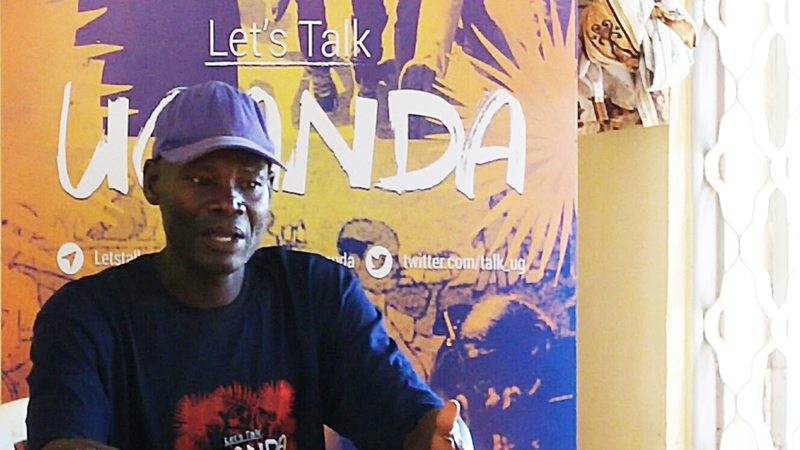
Let’s Talk, Uganda heads to Odek

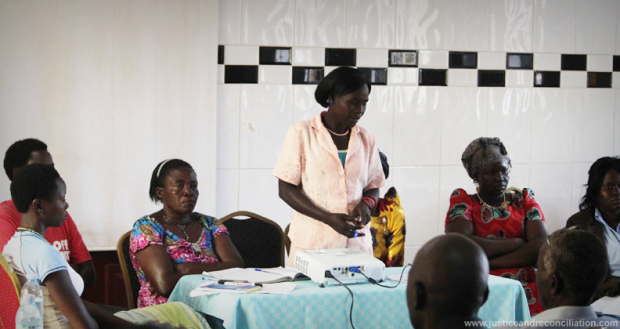
A woman speaks during a dialogue in Lukodi village, Bungatira sub-county.


PRESS RELEASE THURSDAY, JULY 28, 2016

GULU – Today Let’s Talk, Uganda will hold its second community dialogue in Odek, a sub-county in Omoro district, combining the innovative use of social media with offline discussion.

The dialogue aims to give space for the community of Odek to engage in a discussion and hear different viewpoints on transitional justice, peace, truth-telling and reconciliation. The opinions expressed in Odek and online will be shared through dedicated social media pages on Facebook and Twitter to facilitate conversation. A special WhatsApp number has also been created to allow people from across Uganda to take part.

This is the second Let’s Talk, Uganda dialogue, following one in the village of Lukodi in Gulu on 2 June. Like in Lukodi, the people of Odek have welcomed the initiative and expressed their commitment to support it.

Odek sub-county chief Ojok Michael said: “We embrace this new approach to disseminating information about what happened and the experiences of communities after war through the emphasis of the youth and the internet. The word is now a global village.”

The chair of Kica Ber, a survivors group in Odek, Lakwo Nyero Partick Sila, also said: “[The dialogue] will help people outside to know of Odek and the LRA war. Awareness will be created and the minds of people will be changed.”

“It will give time to people to express their opinion. People have no platforms and avenues to express their opinions,” he said.

The dialogue in Odek itself will centre around four topics chosen by people from Odek:

  • Is there peace in the community?
  • How can the voices of the community be heard?
  • Can truth telling bring change?
  • How can we challenge the negative perceptions of Odek?

To join the conversation at Odek, interested participants are asked to follow the Let’s Talk, Uganda Facebook page at fb.me/letstalkuganda, twitter: @talk_ug or send comments or questions to the WhatsApp number at +256 782 112 002.

About Let’s Talk, Uganda

Let’s talk Uganda is a project run jointly by the Justice and Reconciliation Project (JRP) and RNW Media with the aim of engaging people in northern Uganda and Kampala in a dialogue, with a focus on the youth and issues faced by post-conflict societies. The aim is to promote understanding, reconciliation and the transitional justice process in Uganda.
Categories
Blog

Parabongo to come together for forgiveness and reconciliation

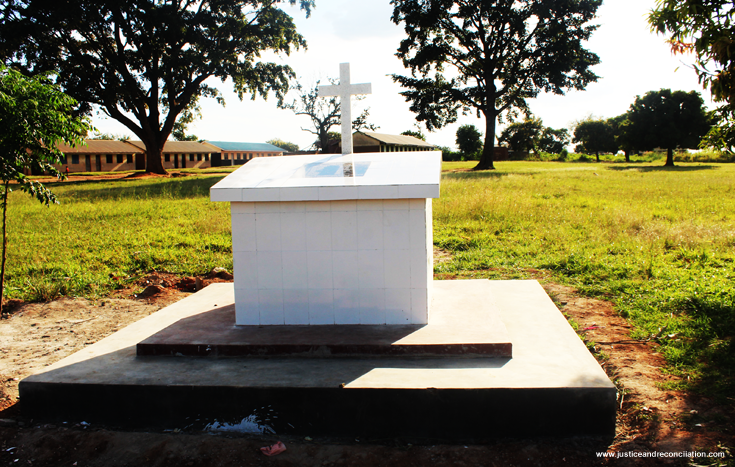
The monument for the Parabongo massacre of 28 July 1996.

On 28 July the community of Parabongo in Amuru district will be holding memorial prayers in remembrance of the LRA’s massacre there in 1996. On that day 20 years ago, the 22 people were killed at Parabongo Primary School.

To commemorate the massacre, the Parabongo 1996 Massacre Association is organising the annual prayers with the theme “forgiveness and reconciliation” and invite all well wishers and friends to join them as they remember their loved ones. The event takes place at Parabongo Primary School on Juba Road, 17 kilometres outside of Gulu.

For further information about attending or contributing to the event, please call JRP at +256471433008 or email info@justiceandreconciliation.com.

Categories
In the News

JRP develops online and offline platform to discuss reconciliation

[yframe url=’https://www.youtube.com/watch?v=DK4v0UVkJmU’]

Categories
Press Releases

‘Let’s Talk, Uganda’ gives space to community voices

FOR IMMEDIATE RELEASE

2016-06-02

Gulu, Uganda

‘Let’s Talk, Uganda’ gives space to community voices

Justin Ocan of Lukodi speaks during a press conference to launch Let's Talk, Uganda at Northern Uganda Media Club in Gulu, 1 June 2016.
Justin Ocan, a community leader in Lukodi, Bungatira sub-county, speaks during a press conference to launch Let’s Talk, Uganda at Northern Uganda Media Club in Gulu, 1 June 2016.

Today the Justice and Reconciliation project and RNW Media are happy to announce the official launch of Let’s Talk, Uganda. The project wants to become a space for Ugandans to discuss issues close to their hearts and the hearts of their families.

We want to create and facilitate conversations about a wide variety of topics by combining the innovative use of new media with offline events. The online platforms will cover a wide range of topics relating to transitional justice, including international and national processes. Let’s Talk, Uganda aims to engage, inform and provide a safe space for respectful dialogue across Uganda.

Through a series of online platforms, including Facebook, Twitter and the Let’s Talk website, Ugandans will be able to access each other’s viewpoints and discuss your own thoughts in a safe space. In the coming months, the project will also visit several locations in northern Uganda, including Lira, Gulu, Lukodi and Odek, as well as Kampala to initiate discussions with local communities. The voices of grass-roots communities will be shared and discussed online, with that discussion feeding back into the community dialogues.

Providing a voice for marginalised communities is very important says Justin Ocan, a community member of Lukodi: “It will help people know what happened during the war,” he says, “The world will become aware of what should have been done.”

Oryem Nyeko, project team leader at the Justice and Reconciliation Project, believes the project will give a space for a more balanced narrative: “The narrative after war is usually shaped by one side, but we all know that history is more complicated. So it’s very important that all Ugandans have their opportunities to have their voices heard.”

Niklas Jakobsson, project coordinator for RNW Media, highlights the importance of respectful dialogue: “Let’s Talk, Uganda is not an information-sharing project. It’s a space for Ugandans to talk with each other, share experiences and find common ground.”

Tanja IJzer, senior program manager at RNW Media: “These issues are very close to the hearts of people in Uganda. Therefore we’re confident that these platforms will allow communities to amplify their voices across the country, creating greater understanding.”

Nancy Apiyo, project officer at JRP, believes this is a unique opportunity for communities: “For the first time the communities we’ve worked with will have their voices heard around the world through media and social media.”

The Justice and Reconciliation Project (JRP) in Gulu, Uganda, has played a key role in transitional justice (TJ) in Uganda since 2005 by seeking to understand and explain the interests, needs, concerns and views of communities affected by conflict.

RNW Media is a Dutch NGO media organisation that wants to achieve social change in communities. In parts of the world where change is difficult because freedom of speech is restricted, RNW uses media for social change, empowering young people to make informed choices through dialogue.

Contact information:

Niklas Jakobsson (RNW Media), Phone: +31 636 184 32, Email: Niklas.jakobsson@rnw.org

Oryem Nyeko (JRP), Phone: (256) 471 433 008 Email: onyeko@justiceandreconciliation.com

The website and social media platforms will be launched by the close of this week

Website: letstalk.ug

Facebook: fb.me/LetsTalkUganda

Twitter: twitter.com/talk_ug

Categories
Reports

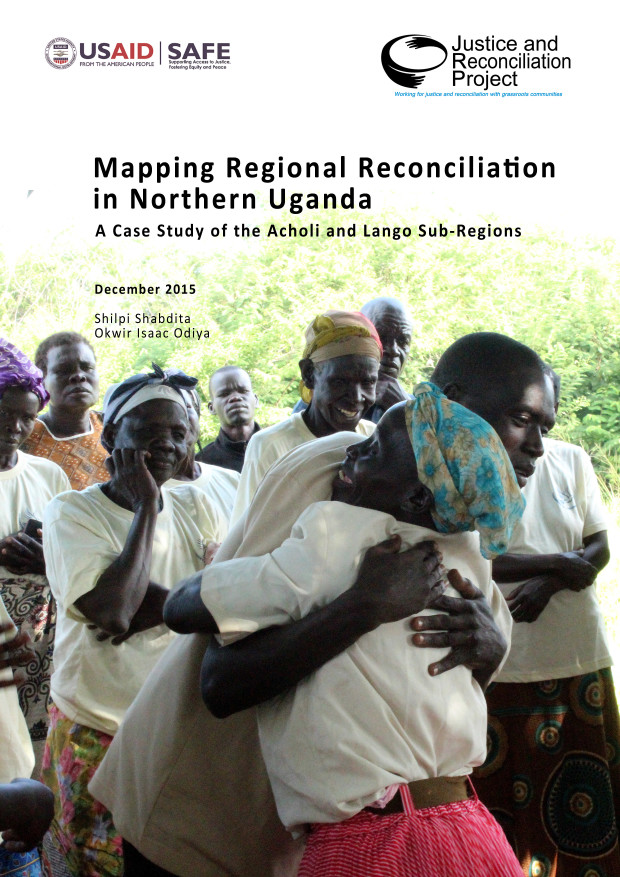
Mapping Regional Reconciliation in Northern Uganda: A Case Study of the Acholi and Lango Sub-Regions

Mapping Regional Reconciliation in Northern Uganda: A Case Study of the Acholi and Lango Sub-Regions
Mapping Regional Reconciliation in Northern Uganda: A Case Study of the Acholi and Lango Sub-Regions

Led by Justice and Reconciliation Project (JRP), with funding support from the United States Agency for International Development (USAID) Supporting Access to Justice, Fostering Equity and Peace (SAFE) programme, this report, titled Mapping Regional  Reconciliation in Northern Uganda: A Case Study of the Acholi and Lango Sub-Regions, examines key conflict drivers at the sub-regional and community levels in the Acholi and Lango sub-regions, specifically, and northern Uganda more broadly, and identifies effective mechanisms for constructive social change processes towards regional reconciliation. It is a significant step towards comprehensively identifying and analysing obstacles to positive peace and reconciliation in the region to ensure that post-war recovery, reconciliation and development interventions are conflict-sensitive and aligned with the social, political and economic needs of the communities.

The report also identifies strategic and effective mechanisms to foster regional reconciliation in ways that value embedded local capacities, narratives and forms of agency in the communities. The report concludes by highlighting recommendations directed to key actors across the horizontal and vertical axis of the society, eliciting a multi-stakeholder approach to engendering sustainable structures of lasting peace and reconciliation in the Acholi and Lango sub-regions.

Download this report here: Mapping Regional Reconciliation in Northern Uganda (pdf)

Categories
Newsroom

Cultural leaders and war-affected women develop action points to reintegrate children born of war

Members of the Women's Advocacy Network present during a dialogue between war-affected women and cultural leaders on the reintegration of children born of war in northern Uganda, held in Gulu on 28 April 2016.
Members of the Women’s Advocacy Network present during a dialogue between war-affected women and cultural leaders on the reintegration of children born of war in northern Uganda, held in Gulu on 28 April 2016.

JRP and the WAN hold dialogue on reintegration of children born of war

GULU – Children born of war and their mothers still face challenges reintegrating into their communities and families in northern Uganda. This was the key message sent during a dialogue between cultural leaders and war-affected women organized by the Women and Advocacy Network and the Justice and Reconciliation Project on 28 April 2016 in Gulu.

The event, which brought together participants from Acholi, Lango, Teso and West Nile, offered a space for women survivors of conflict to share their experiences with representatives of cultural institutions from the Greater North.

The dialogue was punctuated by a presentation from the WAN members appealing to cultural leaders to help reintegrate children born of war into their communities.

Nighty, a member of the WAN, spoke about how when she returned home from the captivity of the LRA she discovered that a child of hers she had been separated from had been mistakenly placed in the home of another family on his return.

“I would like you, my elders, to help let my child come back home,” she asked the cultural leaders in attendance.

The WAN spoke at length about the difficulties they and their children are undergoing today. Many children are unable to trace their patrilineal lines and are consequently unable to access land and other life necessities that are linked to their fathers.

On their return home, some children have either not been reunited with their actual families or have been taken in by the wrong families. As explained by WAN Chairperson Evelyn Amony, this has partly been so because while in captivity their parents would have used fake names to protect their families back home. On return, this has created a problem for mothers, fathers and children eager to trace families that were separated.

Poverty also was cited as the biggest social problem facing children born of war and their children, with facilitating education and health care provision being very hard if not impossible. The issue of land is yet another problem, with children and their mothers landless due to stigma and poor community acceptance.

In attendance of the event was His Highness Drani Stephen Musali Izakare, the Lopirigo of Madi, who appealed to the cultural leaders present to address the issues that arose during the discussion.

“Culture is not static, [it] is dynamic and cultural change is inevitable and welcome where change is needed,” he said, “In Madi, there’s no right way to have a child because children are all of ours.”

At the close of the event, the WAN members and the cultural leaders in attendance worked together to come up with action points for how cultural institutions could be better involved in the reintegration of children born of war.

Some of the commitments generated during the group discussions included to hold clan meetings to create clan laws that would prohibit stigma within communities, integrating war-affected women and their children into cultural leadership at community level and collectively engaging the Ugandan government to address the issues raised.

The meeting was held as part of a JRP project aimed at ensuring the reintegration of children born of war through family reunions in partnership with the Women’s Initiatives for Gender Justice and the Women’s Advocacy Network.

By Benard Okot, with additional writing from Oryem Nyeko

Categories
Blog

TJ Monitor: Thomas Kwoyelo trial, South Sudan prays for peace

Thomas Kwoyelo trial (possibly) delayed

On 4th April 2016, the pre-trial for Thomas Kwoyelo was held at the High Court in Kampala. The prosecution team led by Charles Kaamuli presented charges against Kwoyelo and planned to introduce 113 witnesses to the International Crimes Division of the High Court (the ICD) during trial proceedings. The presiding judge set forth May 2, 2016 as the date for the main trial but questions have, however, raised as to whether the May 2, 2016 will be able to take effect.

According to Registrar Court of Appeal & Registrar in charge of Special Projects, ICD, Mrs. Harriet Ssali Lule , during the ‘Kwoyelo Trial: CSO Outreach Strategy Workshop’ held in Gulu on 20 April by Refugee Law Project, the ICD has not been able to carry out outreach as planned due to lack of funds.

In her presentation, Registrar Ssali Lule said Kwoyelo’s case did not stall due to any fault on the side of the ICD nor the judges, but rather due to the constitutional question and interpretation of the Amnesty Act.

The workshop was also informed that there is need for collaboration with all the stakeholders including the Civil Society Organisation (CSOs) to support the ICD as well as the trial process.


South Sudanese hope for peace as Machar to return to Juba

On Sunday 24, South Sudanese held peace prayers in the capital Juba ahead of the arrival of Riek Machar, reports AFP a move that may see an end to two years of war.

This follows a step by the South Sudan government to issue clearance for Machar, under the UN chief Ban Ki-moon instructions that he (Machar) returns to Juba without delay.

Should the process go on successfully, Marchar will have to take up the post of first vice president alongside arch-rival President Salva Kiir. But most importantly, the move will possibly see an end to the conflict in South Sudan.

Read more

Background of the recent South Sudan conflict

From the time when violence broke out in South Sudan in mid-December 2013, the country experienced reignited ethnic divisions and gross human rights violations.

Under international pressure, there have been attempts to restore peace in the country to no avail. The two sides earlier signed a peace deal in the Ethiopian capital, which paves the way for a ceasefire followed by the formation of a transitional government, the drafting of a new constitution and, eventually, fresh elections.

Both side violated what was agreed which saw a swift resumption of hostilities in the country. (More information: BBC).


Categories
Partners

John D. & Catherine T. MacArthur Foundation

Categories
Partners

Uganda Fund

Categories
Partners

Women’s Initiatives for Gender Justice