Categories
Audio

JRP Podcast Episode 2 – Mapping regional reconciliation in northern Uganda and Dominic Ongwen

(Oryem Nyeko) Hello and welcome to the second episode of JRPs’ podcast. I am Oryem Nyeko, I am  with my colleague Okwir Isaac Odiya of JRP  to talk about a report title ‘ Mapping Regional Reconciliation In Northern Uganda: A Case Study Of Acholi And Lango Sub- Region.

(Okwir Isaac Odiya) Across Ethnic Boundaries project came from the background of our interactions with the community of Acholi, Lango, Teso and West Nile which we learned about the poor relationship and the accusations that is within these communities. We thought of doing this regional reconciliation project to understand whether there is need for regional reconciliation in northern Uganda. This made us to do a baseline study which we came out with the result. This baseline study or the regional reconciliation survey that we did was meant to provide us a baseline for peace building and reconciliation undertaking in northern Uganda. Basically to inform us whether it is true that there is need for reconciliation between the people of northern Uganda and what mechanism therefore should be adopted in order to foster reconciliation in Northern Uganda.

(Oryem)  So the baseline is reported in this report that we are talking about…

(Isaac) Exactly, the ‘Mapping of Regional Reconciliation in Northern Uganda’ is the result of the baseline survey that we did.

(Oryem) So what are some of the findings in the report? What did you find out about the need for regional reconciliation?

(Isaac) From the report, we came with key findings and one of it is the negative perception about the civil war – the war that was fought between the government of Uganda and the LRA. We realized that many people perceived the war as a war that was planned by one ethnic group against the other which basically in many communities that we interacted with, they claim that it was an Acholi war made to make other ethnic groups suffer. So that is one of the findings we realized on the ground.

The second finding is about the tension which is among the ethnic groups in northern Uganda as a result of the crimes that were committed among these communities. There is interpersonal community and ethnic tension which basically people think they were made to suffer because of some other individuals, because of some other community or because of some other ethnic groups.

From the survey that was conducted, we noted that 62% says that there is poor relationship among the people of Lango and Acholi which is as a result of LRA war. They feel that the people of Acholi planned to kill the people of Lango so because of this, there is that poor relationship between the people of Acholi and the people of Lango.

We also noted that in the communities or among the different communities there is fear of revenge by other communities because of what they did maybe. In some of the communities there are some individuals that were involved in some of the atrocities and because of what they did in the atrocities that they feel that their counterparts are going to revenge on them. So there is that fear of revenge within the communities. So generally there is that accusations among the communities, they claim that they suffered because of that individual or that community.

We also found that the community and the individuals are so bitter for lack of accountability and reparation programme. Many individuals and many communities were made to suffer but there is no acknowledgement of the crimes committed on them, there is no accountability for what they underwent and there is no programme to repair them. So the communities are so bitter on the government, they are so bitter on their leaders, they are so bitter on each other within the community because they feel they are not being repaired, they are not being acknowledged for the wrongs that happened to them. Generally the communities feel that they are being segregated in post-conflict service provision. There are a number of programmes that are enrolled by civil society organisations, by the local government but they feel that the services are balanced. It’s not reaching them all, it’s only being directed to one section of the community. Because of this they feel that there is segregation in provision of these services that should really help them to come out of the problem they went through to repair them, to recover from the shock of the war. And because of this segregation, they feel that they are not being honored, they are not being acknowledged as people who also suffered.

In our own analysis we feel that this is another potential source of conflict in that if they feel that one section of the community is being supported to recover from the problem, it means they are not being supported and easily they can begin to revenge, they can begin to cause another conflict on the government or on the communities that are benefiting from some of these services.

 (Oryem) I’m curious, what do you think are some of the root causes of what you are talking about – the segregation; some communities not receiving the programmes that are meant to address the legacy of the war. What’s the cause of that, do you think?

(Isaac)  I think there is lack of a baseline study to understand the different needs of the communities and what they went through. Our service providers – it looks like they don’t understand our communities, what they went through and the kind of services they need so they are kind of neglecting some of these communities to benefit from some of these services. To me I feel that they are not informed, they don’t know what services are supposed to be provided for which communities, which is a gap and that is the only gap I feel.

But also, it is important that we need to train our service providers to know how to work with the victims of conflict. In a way we may also be causing conflict by failing to understand the circumstances that our communities went through. Like when we were interacting with this communities, the people of Odek made mention about the kind of segregation that they are going through. We were made to know that the people of Odek are being considered as Kony, in that they have supported Kony, they groomed Kony to be what he is and Kong is now affecting.  So they contributed in making Kony who he is, and because of that they are being treated as Kony. So I feel that the service providers should be able to separate the people of Odek and Kony himself, taking the fact that they also suffered a lot in the hand of Kony.

(Oryem) So what needs to be done? I mean, you’ve elaborated a bit on that with service providers maybe needing to be more informed about the needs and experiences of the various communities, but what’s a next step in terms of reconciling some of these issues?

(Isaac) In line with service provision, that is basically one of the reasons why we did this report. We want this report to inform transitional justice processes in Uganda and in northern Uganda. We want these key findings and recommendations in this report, Mapping Regional Reconciliation, to really inform the different stakeholders – peacebuilders and reconciliation activists to really know what are the gaps in the community and then what are some of the steps that are required to be taken in order to mitigate or to provide remedies to some of these gaps in the community. So that is the first step.

I would urge the different stakeholders to really pay attention to this report so that they can learn the kind of community we are working with, the gaps in the community and the kind of careful steps they should take in order to provide reconciliation within these communities.

Secondly, it is important to work in partnership, the different civil society organizations, the NGOs and the government, the local government. We need to be coordinating so that we inform each other on the gaps on the ground and then the best step, we can brainstorm on the best steps that should really be taken so that we really reach this community so that we address the specific gaps in this community. And by doing this we are going to act in the interests of the community we are serving.

I want to mention another few things in regards to reconciliation gaps. What requires to be done. We also noted that there is a lack of platform to foster reconciliation, in that victims’ communities are there in the community, but they lack forums to which they should really communicate, to which they should really engage to address some of their own problems. This is also coupled with the criminal prosecution process that is going on, the trial of Kwoyelo, the trial of Dominic Ongwen, which is kind of fueling more conflict in the community. So there is also this problem that is existing in the community following the survey that we conducted, or working with these communities. Which my recommendation would go to the various stakeholders to really support the peacebuilding and reconciliation structures that we have on the ground or to establish more, so that they provide pillars to these conflict affected community to interact with, to discuss their issues, to support them in their reconciliation and recovery programme.

It’s all about providing a platform for these people to interact, to really try to see the best way of addressing some of their issues, to channel their problems so that it is heard and addressed by the stakeholders.

I would also recommend for a trauma healing project to really be enrolled in the community so that people find ways to move out of their problems instead of getting stuck. Much as accountability has not been done, much as there is no adequate reparation they still need to move on with their lives. So it is important to have such programmes.

(Oryem) Can I just ask how do the criminal proceedings fuel conflict in these communities?

(Isaac) From the interaction we had with these communities, we learned that they have varying interests in line with the result of the verdict. In the case of Dominic Ongwen’s trial, there are those who want to see Dominic Ongwen prosecuted, they want to see him guilty and there are those who want to see Dominic Ongwen coming back home acquitted from the sentence.

So you can see the communities are now looking at those who are in support of Dominic Ongwen as those who supported the atrocities that made them suffer in northern Uganda. Those who look at the people who want to see Dominick Ongwen jailed, they look at them as those who do not want reconciliation to be done so that people get to live back together.

(Oryem) Because of course the question of criminal accountability and Dominic Ongwen has implications on the communities that have been affected by the case for Lukodi, I imagine that’s what you’re talking about, and the other communities, Odek, Abok, and so on, that his charges are based on, they obviously have a vested interest in seeing some sort of accountability towards him. Whereas in other communities, in Coorom, for example, where Ongwen is from there is a sense that there should be more of a reconciliatory process. Although in my experience, I found that even people in Lukodi also want to reconcile with the people from where Ongwen is from, which I find interesting and I think it kind of speaks to the point that you’re making that these issues have a regional aspect to them. In that it’s not the same everywhere. Not everyone in northern Uganda has the same sense, not everyone in Acholi and Lango has the same feelings towards Ongwen or to criminal accountability or to the impact of the war. I think that’s kind of it

(Isaac) Exactly, and that’s where it calls for how do we manage the process?  So that at the end of it all, irrespective of the result of the trial, how are we going to ensure that there is reconciliation, how are we going to we to work together, the people of Lango, the people of Acholi, the people of Lukodi, the people of Coorom, irrespective of the results of the hearing. This is what we should manage.


Categories
Blog

New internships at JRP

.
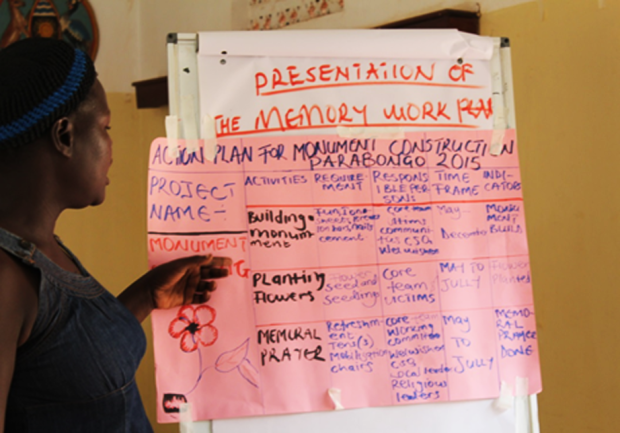
JRP holds a capacity building workshop is held at Parabongo sub-county, Agago district in early 2015

JRP is looking for a vibrant and creative individuals to support our Gender Justice and Communications departments.

Communications Intern

We’re looking for creative current or recent university students with great writing skills and an interest in transitional justice and human rights in Uganda and Africa’s Great Lakes region to apply here. Read more about (and apply to) the position here.

Gender Justice Intern

Current or recent Master’s degree students in peace and conflict studies, law, development studies, social work or any related field are encouraged to apply to this six month internship with our Gender Justice department. Read more and apply here.

For future updates sign up to our Job’s & Internships mailing list. You can also find the Justice and Reconciliation Project on LinkedIn.

Categories
Blog

How can we improve our website?

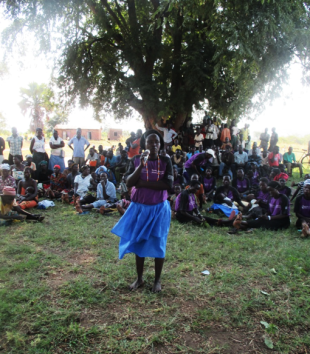
 The chairlady of Amapara women’s group addressing the community in Aringapi subcounty on 8th October 2015 on the challenges that survivors of SGBV are facing in the community.
.

JRP is conducting a survey to gauge views on how we can improve our website. We aim to build on it as a resource for information and discussion on justice and reconciliation in Uganda and Africa’s Great Lakes Region, and you play a part!

Let us know what you think in this very short (it’s only four questions!) survey here. All responses are anonymous!

Categories
Press Releases

War continues for children born in LRA captivity

Children play as part of an innovative project documenting the lives and experiences of children born into LRA captivity. Photo courtesy of Beth Stewart.

PRESS RELEASE 4 February 2016

GULU- Children born into the captivity of the Lord’s Resistance Army (LRA) must be mainstreamed as partners and agents in post-conflict reconstruction say researchers from the Justice and Reconciliation Project (JRP) in Gulu.

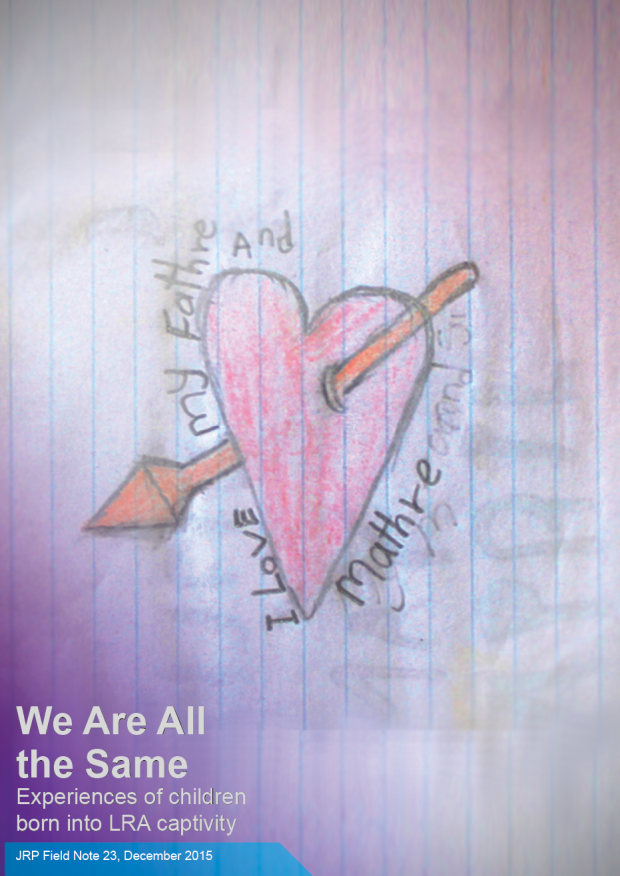
According to a newly published field note by JRP titled “We Are All the Same: Experiences of children born into LRA captivity”, children born into the captivity of the LRA experience life in ways that are unique to their identities and should be addressed specially in transitional justice.

“We Are All the Same”, is based on an innovative three year project documenting the lives of 29 children aged between 11 and 15 living in the urban centre of Gulu by researchers Beth W. Stewart and Aloyo Proscovia. The report documents the lives of the participating children between 2011 and 2014, presenting some of the first extensive narrative accounts of the views and experiences of children born into captivity following reintegration.

Based on the views and experiences shared by the participating children, the report provides recommendations for the Ugandan government as well as civil society to address existing gaps, including supporting linking the children with their extended families, and ensuring that their fathers, who in some cases reportedly earn government incomes as soldiers, pay child support.

“As northern Uganda moves further away from its experience of active war, the ramifications continue to be lived each day,” researcher Beth Stewart says, “Without measures to address the needs and rights [of children born into LRA captivity], the violence of the war continues.”

The field note and project are part of JRP’s continued work to ensure the participation of children as victims of conflict, with unique experiences, challenges and voices, in processes of justice, healing and reconciliation. It follows research exploring the reintegration challenges of children born of war and their mothers and an initiative that engages survivors, communities, opinion leaders and policy-makers on providing redress for sexual- and gender-based violence survivors.

“We Are All the Same: Experiences of children born into LRA captivity” can be downloaded on JRP’s website here: http://justiceandreconciliation.com/publications/field-notes/2015/we-are-all-the-same-experiences-of-children-born-into-lra-captivity/.

 ###


Download this release here (pdf): 2015-02-04 War continues for children born in LRA captivity


Categories
Field Notes

We Are All The Same: Experiences of children born into LRA captivity

We Are All The Same: Experiences of children born into LRA captivity

Children born into the captivity of the Lord’s Resistance Army (LRA) remain a largely neglected and overlooked child survivor population. The children who successfully transitioned out of the LRA exist on the margins of their society, stigmatised and with limited life opportunities. This field note offers a review of the lives of 29 such children living in the urban centre of Gulu town, drawn from a three-year project documenting their lives. While the children have developed strategies to conceal their true identities, this report determines ways to support their future well-being, while simultaneously contributing to the reconciliation process of their communities.

The research findings include:

The children face significant stigma from communities, peers, and even at times from family members, including violent abuse from stepfathers, so they employ strategies to keep their identities secret. Those whose fathers are top commanders still at-large fear for their safety if their fathers are captured. Other children do not know their lineages and long to connect. All the mothers find it difficult to tell them the realities of their identities. Despite such stigma and uncertain identities, the children insist they are the same as other children.

Support from family members is vital to their sense of well-being, especially with their mothers whom they love deeply. Many children lost siblings in the bush.

Many children live with memories and trauma. They remember the violence from the bush and feel the loss of a parent, or of both parents. Remembering is triggered by sadness resulting from quarrelling, beatings, or sickness. For some, their memories are physically embodied and manifest as spiritual problems, or psychosis. All the children who remember employ strategies to forget.

Religion is important in the children’s lives and prayer offers them a form of meditation to help them quiet their minds, while church provides them with a welcoming place to be among friends.

Children are unlikely to access their land inheritances, and they feel hopeless.

The children dream of a bright future for themselves, but the layering of their unique hardships on top of the significant poverty they live in makes that unlikely.

The children found the project to be transformative. The participatory action research methodology and opportunity to play enabled deep friendships to develop while the children learned about themselves, their mothers, and how to manage their identities and challenge intergenerational problems.

A number of the children’s rights have been violated and require redress. They should be active agents in processes of transitional justice.

Important recommendations:

  1. Documentation of children born into LRA captivity must continue and should include records of children who died.
  2. Broad community sensitisation initiatives must be implemented.
  3. The children must be appropriately engaged to identify needs and peer support activities such as this project should be expanded across the region.
  4. Mothers must be empowered with livelihood skills and grants.
  5. Fathers must be held accountable for support of their children.
  6. The government must support the children so they grow into productive citizens

Download this Field Note here (pdf): We Are All The Same – Experiences of children born into LRA captivity 2015-12-22


Categories
Blog

Listen to JRP’s new podcast

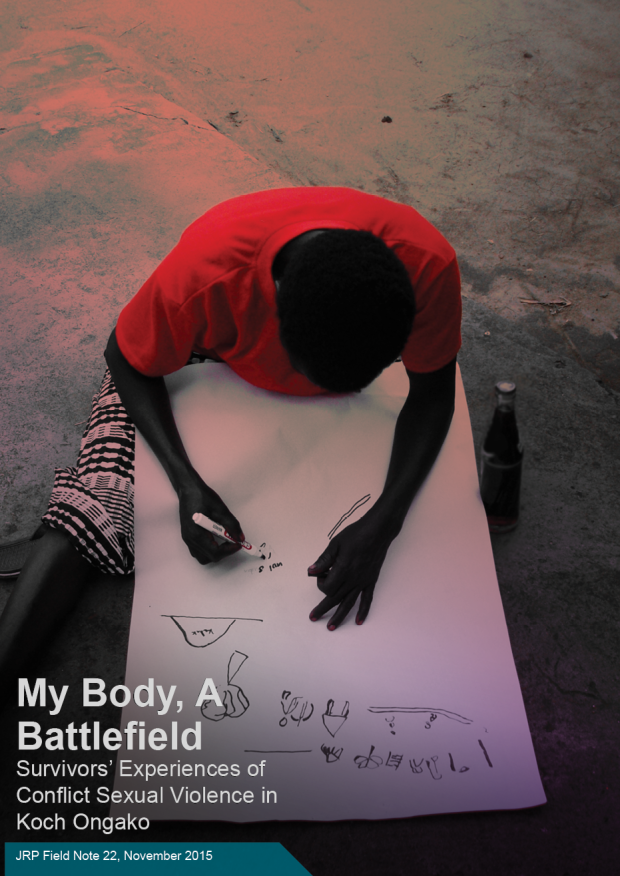
We at JRP are very excited to launch a new podcast where we’ll be reflecting on justice and reconciliation issues in northern Uganda and Africa’s Great Lakes region. The first episode features Oryem Nyeko, Lindsay McClain Opiyo and Nancy Apiyo talking how about JRP’s new field note, My Body, A Battlefield: Survivors’ experiences of conflict-sexual violence in Koch Ongako came about. 

Listen to the podcast below:

A transcript of this episode can be read here: http://justiceandreconciliation.com/media/audio/2015/jrp-podcast-episode-1-documenting-conflict-sexual-violence/

Categories
Audio

JRP Podcast Episode 1 – Documenting conflict sexual violence


Oryem Nyeko: Hi this is Oryem Nyeko, I am here with Lindsay McClain Opiyo who is the team leader for Gender Justice here at JRP. We are trying something new – we are trying to do a podcast. This is our first episode and we are very excited.

We are here to talk about a new publication that JRP has just put out which is a field note called “My Body, A Battlefield”.

Lindsay is a co-author and Lindsay I wanted to hear from you what this field note is all about. Maybe if you can give us an overview of this report?

Lindsay McClain Opiyo: Thanks Oryem. Yeah, this is our latest field note from JRP that is looking at everyday experiences of conflict-sexual violence in Koch Ongako, a community in Gulu district here in northern Uganda.

The field note is documenting men and women’s experience of conflict sexual violence during northern Uganda’s long standing conflicts both at the hands of state and non-state armed actors and also at the hands of civilians when they were living in internally displaced person’s camps.

There’s kind of three big takeaways that we would like people to have from the report. One, is that it doesn’t take a big massacre or a big event to make peoples experiences during the war worthy of documentation. As readers will find from the report, a lot of the accounts are of women and to some extent men just going about their daily lives during the conflict and how they were targeted for sexual violence by different conflict actors.

Two would be the importance of methodology when you are actually trying to document and preserve accounts of conflict sexual violence. All too often especially with prosecutions and court processes, investigations, it’s very cut and dry, and we use methodologies like storytelling and focus group discussions in order to get people to open up about these very stigmatized events that happened to them. And that’s our second takeaway that it’s important to use this more informal methodologies to document these experiences.

And our third takeaway is that it is very important to have documentation of these experiences in order for survivors to advocate for redress. So we hope that the report will be something that survivors can actually use when they are petitioning government and other bodies for reparations and other forms of redress for what they went through.

(Oryem) We know that this is just one community in northern Uganda that experienced this conflict. How emblematic do you think that it is, in terms of the bigger picture of sexual violence on questions of accountability and healing and so on?

(Lindsay) Our sample size was relatively small. We talked to 60-something people. A little over 50 of them admitted to being survivors of conflict sexual violence, so it is not a humongous sample size and we were exclusively looking at Koch Ongako. But what we found within those accounts is that a lot of patterns started to emerge. One of the most interesting ones was this idea of dangerous spots and that due the nature of women’s lives during the war that they were targeted for conflict sexual violence while they were going about daily life, while they were going to the gardens to dig, while they were even going to buy salt to cook for their families.

So one would imagine that this is fairly representative of other communities within northern Uganda. There is nothing about Koch that would necessarily make it different from other communities but it is definitely something that would merit more research to see the extent to which these lots of pardon also were in other communities.

(Oryem): I’m here now with Nancy Apiyo who is a co-author of My Body, A Battlefield and she was here in 2013 when the Gender Justice team began the research process for this field note in Koch Ongako.

I wanted to know from you Nancy, what was that process like doing this documentation? Obviously these stories are very painful and I imagine it was very traumatic for some of those survivors to talk about their experiences. So could you tell us a bit more about what you witnessed when you went though this documentation process?

Nancy Apiyo: When we started to work with the community of Koch in about 2012, we noted that from the stories that the women would share there were stories of violations during the conflict of sexual violation and violations of that nature. Most of the women we interacted with at that time mentioned to us that they were living positively with HIV and most of them linked it to the conflict and some mentioned that they got the HIV out of the rape.

So as a team we were touched by this and we did not want it to just stop there, we didn’t want these stories to only remain in those storytelling circles because the first objective of those storytelling was for healing purposes, to build confidence around the women and we did not have this idea of publishing these stories out to the public. But when we heard this we felt it was important to let the world know what really happened in Koch and break this silence of what the community went through during the conflict around that time. So we had a discussion with the women about what they thought about more people outside the community knowing what they went through and if that was important to them and they responded that it was important that the rest of the world knows what happened to them in the community. And that is when we got this idea of publishing this story or beginning to write and have an account of what happened in Koch during the conflict.

(Oryem) Where there some people who, maybe, didn’t feel comfortable speaking out in the beginning but eventually opened up a bit more as the process went along?

(Nancy) There were women who once they heard others talk they also began to open up and they were like, “When I heard her story it compelled me to also talk about my own story. I felt that actually what she went through is even worse than what I went through and this alone gave me the courage to also stand up speak about what I also went though.”

I think listening to each other’s story and knowing the fact that they all went through these things, they identified with each other and giving them also the confidence to speak by listening to someone’s story they also get the courage to also talk about their own stories.

(Oryem) I know that the field note doesn’t just talk about the experiences of women, there are also some quotes that you have from men. What was that process like, getting the stories from the men?

(Nancy) We didn’t have men at first. Our first plan was to talk to the women and get in to the sexual violence that women went through. But as we worked with women they informed us that there were also men who also went through SGBV but they were quiet and nobody was reaching out to them. So we told them that if they wanted the men’s stories also to be out, that is also up to the community to decide and it would be also important. So it’s the women who reached out to the men, talked to them and brought them into the storytelling circles and the men were also able to share their stories. Although with the men we had a one-on-one interviews with them and not a group kind of thing.

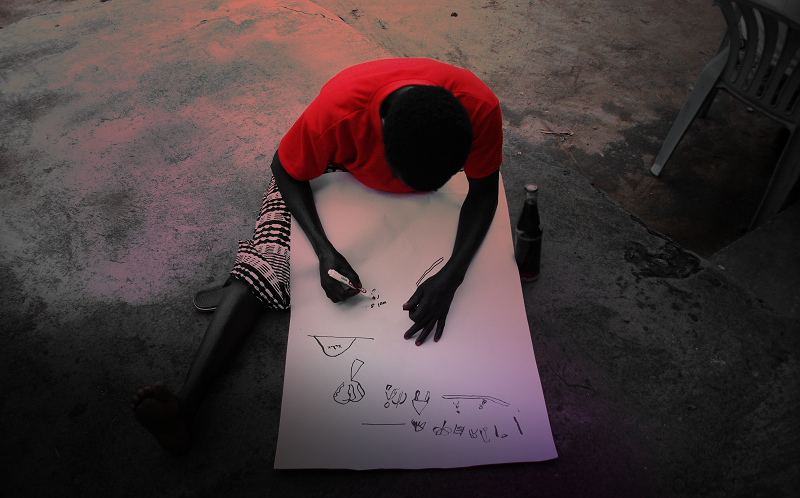
But the good thing with this documentation also the methods that we kept on using, using pictures, songs, dramas, sometimes they act out these issues, sometimes they draw them in pictures. Things like that. Such exercises helped to reduce the tension around violation and make the women relax, and the men, and enable them to talk.

(Oryem) Was there any particular story that struck you individually as a person that you could tell us about?

(Nancy) One of the women who had been raped – gang-raped, actually, by the government soldiers and she had tried to get justice in vain and had given up and had moved on, okay tried to move on. And so, during this day she was not in the first lot of women that we shared stories with or we listened to and as time went by, I think, a year later, her colleagues asked her to join the storytelling circle. They informed us that there is this lady we know that she really went through something very bad and it would be good for her to benefit from this. So, during one of the retreats, they brought her. They had already talked to her and she had accepted the whole thing and so she came.

I remember one of her first statements was she thought that she would never have the opportunity to share this story to anyone. She would never be listened to again. And to her the fact that this documentation process was an opportunity for her and all those other women who have gone through sexual violence to get justice. And to her the reason why she came for that particular storytelling at that time for that retreat was so that women who were violated get justice and it wasn’t for her, it was for somebody out there who went through the same thing that she went through to get justice and so that the world to knows that these things really happened. She wanted people to listen to what she went through.

And so this lady told us all the details of how she was raped, the whole experience. There is a book that I read where we are told that sometimes when somebody is being raped they get numb at that particular time and they are oblivious of what is happening and may not know even what is happening and when it comes to narrating, they may not give you all the details of maybe, he unzipped like this, he turned me like this or this is what they did. But this lady gave us all the details of what really happened that day and to me I think that is the story that really changed… and that is the story that kept me going to really write this and I really wanted this report to come out. That is the story that stood out for me most.

(Oryem) What do you hope is going to happen with this publication, with this being disseminated all around the world? What do you hope? What’s your goal?

(Nancy) For now, I think the short term goal for now as I see is first of all to break the silence. There is no much documentation of sexual violence that happened in the camps. Most of the narratives we have been hearing was for abduction and things that happened in captivity but not really what happened in the camps during the conflict. So me I think, step one, that this report is going to do is to share that really sexual violence happened in the camps, the stories.

There are reports I know of what happened… Human Rights Watch indicating this and this, but the narratives from the community indicating that this happened, so I think this report is first of all going to contribute towards that knowledge that during camps, the same people who were supposed to protect the people did this and even at the hands of the community themselves, the women faced this kinds of violation.

(Oryem) I want to close, with a question about the title, My body, A Battlefield. Could you tell us how that title came about?

(Nancy) During one of the discussions we had with the local leaders, one of them mentioned that men suffered in the war but the women suffered using their bodies. During the war it’s their bodies that suffered, and to me that is the statement that stood out for me and that is where we got the title for this book that my body was a battlefield to show how during the war, the battlefield was actually the woman’s body. Women were not taken maybe to be as soldiers. Those who were at the camps were not recruited as mobiles. They were not beaten or made to do hard labor but as soon as she is got, she is raped and that is the kind of punishment that women faced during the conflict. They felt the brunt of the conflict on their bodies. That statement really stood out for me and that is how we got the title of the report.

Categories
Field Notes

My Body, A Battlefield: Survivors’ Experiences of Conflict Sexual Violence in Koch Ongako

My Body, a Battlefield: Survivors' Experiences of Conflict Sexual Violence in Koch Ongako
My Body, A Battlefield: Survivors’ Experiences of Conflict Sexual Violence in Koch Ongako

Sexual- and gender-based violence (SGBV), especially in the context of protracted conflict, continues to be one of the least accounted for crimes in Uganda and the world. In January 2013, the Justice and Reconciliation Project (JRP) embarked on a process to document, through storytelling and other participatory methods, the experiences of conflict sexual violence that occurred during more than two decades of conflict between the Government of Uganda (GoU) and the Lord’s Resistance Army (LRA) in Koch Ongako, a community in Gulu district, northern Uganda. The purpose of the exercise was to document and acknowledge these violations and their long-term consequences on the lives of male and female victims and the community in which they live, to help survivors come to terms with the past, and to inform policies and processes to provide redress and accountability. It is envisaged that this document shall inform and feed into national processes for transitional justice (TJ), both in terms substance and the participatory process used to engage victims.

Download this publication here: My Body, A Battlefield 2015-12-01(pdf)

Categories
Newsletters & Magazines

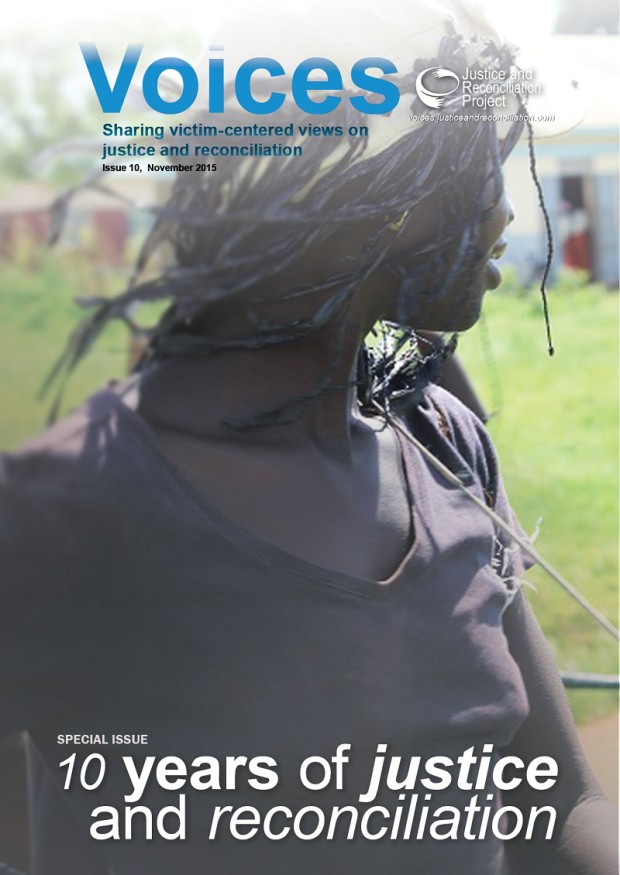
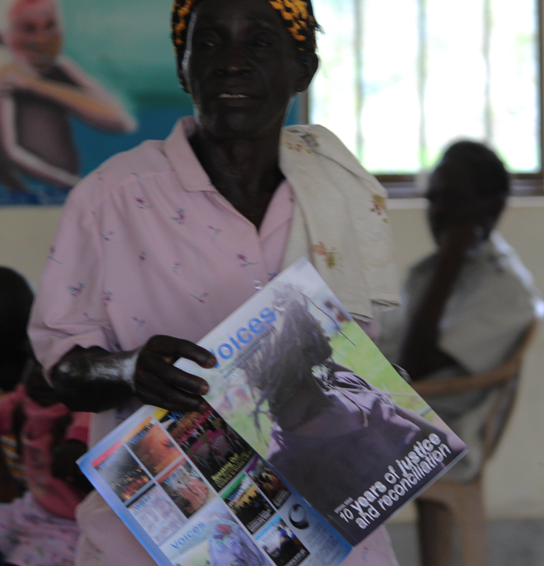
Voices Magazine – 10 years of justice and reconciliation

Voices, Issue, 10 November 2015

This special issue of Voices looks back at the past 10 years of transition, justice and reconciliation in northern Uganda and at the Justice and Reconciliation Project.

Articles include features from members of the Lukodi Massacre Memorial Association, the Mukura Memorial Development Initiative and JRP.

Download this issue here: Voices, Issue 10, November 2015 (pdf)

Categories
Statements & Briefs

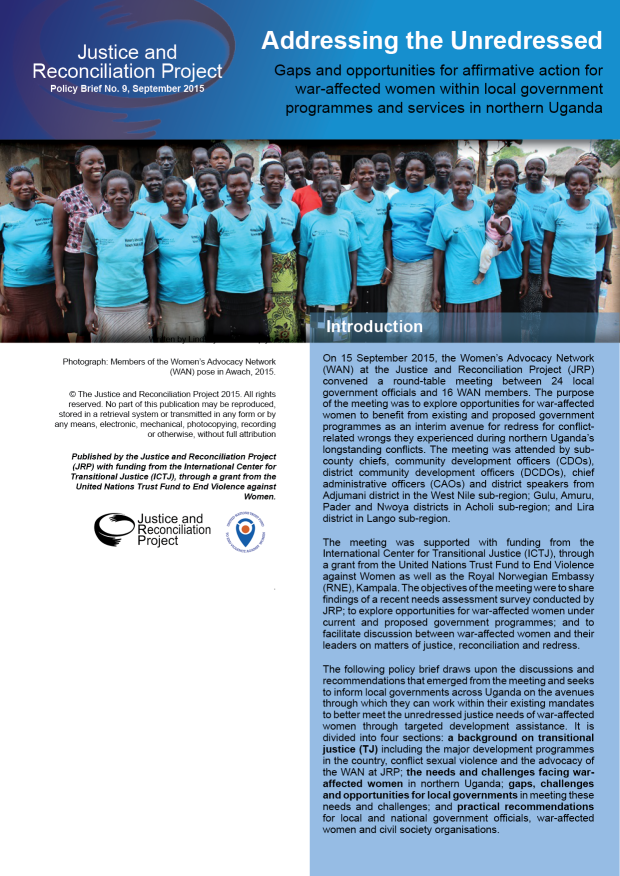
Addressing the Unredressed – Gaps and opportunities for affirmative action for war-affected women within local government programmes and services in northern Uganda

Policy Brief - Addressing the Unredressed Cover

On 15 September 2015, the Women’s Advocacy Network (WAN) at the Justice and Reconciliation Project (JRP) convened a round-table meeting between 24 local government officials and 16 WAN members. The purpose of the meeting was to explore opportunities for war-affected women to benefit from existing and proposed government programmes as an interim avenue for redress for conflict-related wrongs they experienced during northern Uganda’s longstanding conflicts. The meeting was attended by sub-county chiefs, community development officers (CDOs), district community development officers (DCDOs), chief administrative officers (CAOs) and district speakers from Adjumani district in the West Nile sub-region; Gulu, Amuru, Pader and Nwoya districts in Acholi sub-region; and Lira district in Lango sub-region.

The meeting was supported with funding from the International Center for Transitional Justice (ICTJ), through a grant from the United Nations Trust Fund to End Violence against Women as well as the Royal Norwegian Embassy (RNE), Kampala. The objectives of the meeting were to share findings of a recent needs assessment survey conducted by JRP; to explore opportunities for war-affected women under current and proposed government programmes; and to facilitate discussion between war-affected women and their leaders on matters of justice, reconciliation and redress.

This policy brief draws upon the discussions and recommendations that emerged from the meeting and seeks to inform local governments across Uganda on the avenues through which they can work within their existing mandates to better meet the unredressed justice needs of war-affected women through targeted development assistance. It is divided into four sections: a background on transitional justice (TJ) including the major development programmes in the country, conflict sexual violence and the advocacy of the WAN at JRP; the needs and challenges facing war-affected women in northern Uganda; gaps, challenges and opportunities for local governments in meeting these needs and challenges; and practical recommendations for local and national government officials, war-affected women and civil society organisations.

Read the full policy brief here: Policy Brief – Addressing the Unredressed (PDF)