Over the past year, the Justice and Reconciliation Project (JRP) has been grateful for the opportunity to work with a number individuals affected by the war in northern Uganda, including people living in internally-displaced persons camps, youth, women and ex-combatants. JRP would like to express its appreciation to those dedicated individuals who have pursued their own stake in justice by persevering through the Juba Peace Talks, in particular the dilemma of accountability and reconciliation, not forgetting the continued persistence by war affected communities in their efforts to employ local coping mechanisms to promote peace, harmony and social coexistence.
2009 was marked by a significant improvement in the humanitarian situation in northern Uganda as the region embarked on the long road to recovery from conflict. In the wake of a failed attempt to sign the Final Peace Agreement in November 2008, and the resumption of hostilities between the UPDF and the LRA marked by the launch of operation Lightening Thunder, the future of northern Uganda hung in the balance. While many across northern Uganda predicted the worst, the security situation improved substantially, allowing thousands of IDPs to return to their original homesteads while many of the displacement camps were demolished as proof of the finality of the return process. The determination to return to former homesteads and rebuild lives and villages stands as a testament to the capacity of those affected by the conflict to persevere amidst challenges such as lacking educational, health and other social services.
On the transitional justice front, the government of Uganda began to implement elements of the Juba peace protocols still considered valid despite the failure to reach a final agreement. Funds for the peace, recovery and development plan (PRDP) were availed and massive reconstruction works were launched. The government, through the Justice Law and Order Sector (JLOS) working group, also began drafting policies and a framework for the implementation of transitional justice mechanisms. Huge strides were made in setting up the War Crimes Division of the High Court, and countrywide consultations were carried out to solicit views on the domestication of the Rome Statute.
Driven by the desire to pursue justice and reconciliation in Uganda, JRP continued to monitor developments in transitional justice and contribute to policy debates through action oriented research and advocacy in 2009. JRP’s advocacy strategy was dual in nature; at the national level targeting policy makers, donors, and other government organs including the Judiciary, the Amnesty Commission and the Parliament of Uganda; while engaging with grassroots communities at the local level to improve documentation among war affected communities and empower communities to advocate for appropriate justice and reconciliation mechanisms.
JRP has done this using community based approaches, such as community dialogues, dissemination of research reports at the grassroots level, research and documentation of local level transitional initiatives and various other efforts to ensure that the views of grassroots people are included in transitional justice debates. This annual report presents a summary of all activities implemented by JRP in the year 2009. Special thanks go to our donors: the Norwegian Embassy, who made all of these achievements possible.
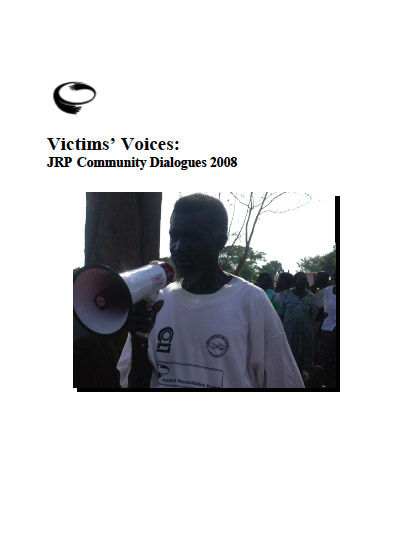
A community member shares his views at a JRP community dialogue
A community member shares his views at a JRP community dialogue
This report presents the diverging opinions that exist among the war-affected people in northern Uganda concerning how post-conflict issues of justice and reconciliation should be handled.
These responses were gathered by JRP camp focal persons from four community dialogues conducted in Kitgum and Amuru districts in 2008. The dialogues present opinions of participants about how reconciliation and healing can be promoted among the war-affected communities in northern Uganda.
They indicate that while many people in northern Uganda are of the view perpetrators of war crimes need to be forgiven, a significant majority would also like to see some form of accountability meted out. The views of war-affected persons about the role of local mechanisms in post-conflict reconciliation and healing in northern Uganda also feature in the dialogues. While it has always been assumed that war-affected communities wholeheartedly support the use of local mechanisms such as mato oput, it is also interesting to note that a significant minority have reservations about the effectiveness and relevance of these mechanisms. Equally interesting and controversial is the opinion of respondents about who is responsible for the conflict in northern Uganda.
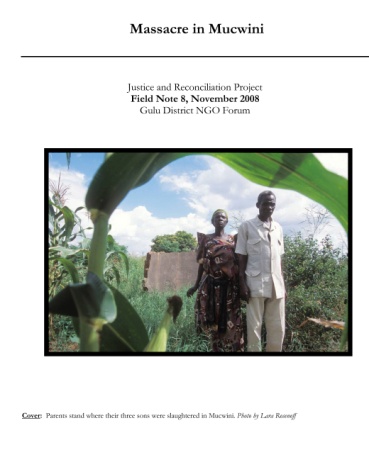
Two residents stand at the site where their sons were killed in the massacre
Two residents stand at the site where their sons were killed in the massacre
In the early morning hours of 24 July 2002, the villages around Mucwini awoke to the bloodied corpses of 56 men, women and children. The massacre was a deliberate and ruthless retaliation by the Lord’s Resistance Army (LRA) after a local man they had abducted escaped from them with a gun. After they were finished with their ‘work,’ the LRA wrote a letter to the populace, blaming them for the massacre and threatening more killings if the stolen gun was not recovered.
In the aftermath of the massacre, the victims accused the escaped man of purposely orchestrating the massacre to resolve a long standing land dispute between his clan and that of the majority of victims. Since the massacre, both clans have ceased relations and have threatened retaliation if the issue is not resolved using the traditional mechanism of Mato Oput (drinking the bitter root). The victim clan demands the payment Kwor, or death compensation and the elders have busied themselves trying to cool tensions. In the absence of formal justice, the victims attempt to come to terms with what happened using what is available to them: traditional justice mechanisms.
The aftermath of the Mucwini massacre is an important case study of the justice and reconciliation challenges facing peace builders as the Juba Peace Talks conclude. Documenting the events of the massacre and attempts by victims to come to terms with it, this Field Note identifies three important lessons for understanding the impact of violence on community level relations in northern Uganda, and the prospects for transitional justice. First, it illustrates how the local victim population copes with the aftermath of gross atrocity in the absence of accountability. Secondly, it suggests the need to revisit the potential role of traditional justice mechanisms to resolve local conflicts. Finally, it highlights how the war has exacerbated underlying tensions around land ownership.
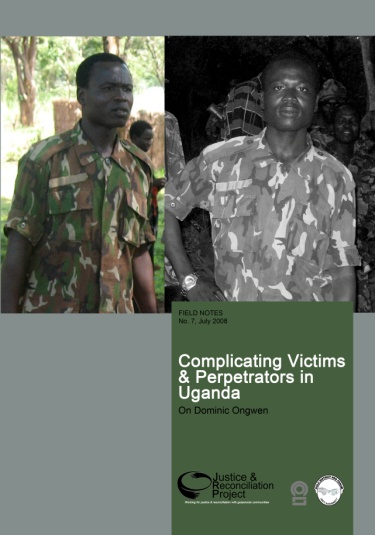
Dominic Ongwen was around ten years old when he was abducted on his way to school by the notorious Lord’s Resistance Army (LRA). He was trained as a ‘child soldier’ to fight against the Government of Uganda and forced to kill, mutilate, loot from and rape civilians. He became so efficient and fearlessly loyal to his superiors that he was eventually ‘promoted’ to the ‘inner circle’ of the LRA. In October 2005, the International Criminal Court (ICC) issued arrest warrants for Ongwen for crimes against humanity, including massacres and the abduction and enslavement of children. As such, Ongwen is the first known person to be charged with the same war crimes of which he is also victim.
Ongwen’s case raises vexing justice questions. How should individual responsibility be addressed in the context of collective victimization? What agency is available to individuals who are raised within a setting of extreme brutality? How can justice be achieved for Ongwen and for the victims of the crimes he committed?
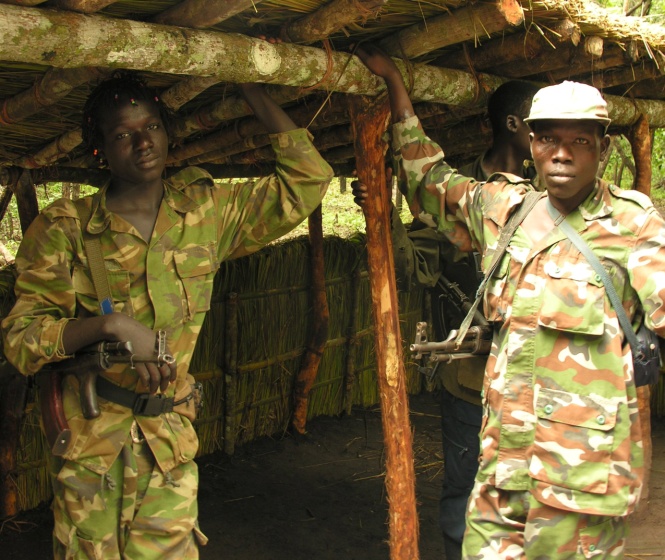
The Lord’s Resistance Army (LRA)’s use of abducted children and youth has been much researched, and the horrors of their experiences in captivity and difficulties reintegrating into their communities recorded. Nonetheless, the existing disarmament, demobilization and reintegration strategies pursued to date are brief and insufficient interventions.
This project was conducted by Justice and Reconciliation Project and Quaker Peace & Social Witness. Both organizations had encountered in the course of previous research the existence of self-formed groups of formerly abducted persons (FAPs) / former-LRA, and wanted to assess the role they could and did play in the process of grassroots level reintegration and reconciliation.
Our findings suggest that former LRA peer support groups are an important and effective vehicle for reintegration and reconciliation, all the more so given the paucity of alternative long-term reintegration provision. Former LRA peer groups positively affect:
economic reintegration including provision of livelihoods and microfinance
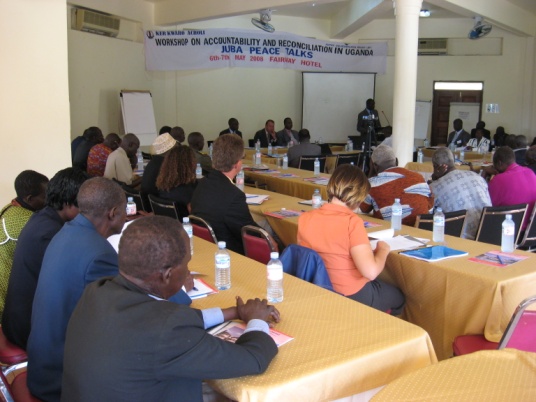
Participants during the workshop on accountability and reconciliation in Kampala
Participants during the workshop on accountability and reconciliation in Kampala
This workshop follows the conclusion of the Final Peace Agreement (FPA) in Juba between the Lord’s Resistance Army (LRA) and the Government of Uganda (GoU). Mediated by the Government of Southern
Sudan (GoSS) under Chief mediator Dr.Riek Machar, the vice president of Southern Sudan, this remarkable agreement which begun two years ago was to be signed by LRA leader Joseph Kony on 10th April 2008. However, he did not sign as expected and instead sought clarifications on the specificities on the protocol of accountability and reconciliation as well as the disarmament, demobilization and re-integration agreements. In particular, the LRA leader Joseph Kony wanted to know more about the Acholi traditional justice system of mato oput, its linkage to the proposed special division of the High Court and other formal institutions in the agreements.
It was on the basis of this that His Highness Rwot David Onen Acana II, the Acholi Cultural leader, with the assistance of the Justice and Reconciliation Project (JRP), was tasked to lead a consultative process that would bring together like minded actors to deliberate in an attempt to provide clarity to the LRA leaders’ concerns. Therefore, on the 6th and 7th May 2008, a workshop was convened at the Fairway Hotel, Kampala.
The objective of the workshop was to clarify the procedural steps required for the implementation of the Agreement on Accountability. As a result, the workshop was to produce an explanatory note outlining procedures on key technical issues in the Agreement on Accountability and Reconciliation that was to be made immediately available to the LRA leadership.
In arriving at these, the conference organizers identified key themes to be discussed, and these included: (i) the role of investigations and self-disclosure; (ii) the criteria for allocation of individuals to the various proceedings; (iii) description of various accountability institutions (courts, traditional justice, and truth-telling mechanisms) and their jurisdictions; (iv) the relationship between the various accountability institutions, and, (v) the possible outcomes of the proceedings for individuals..
From July to October 2007, Quaker Peace and Social Witness (QPSW) and the Justice and Reconciliation Project (JRP) conducted qualitative research with ex-LRA fighters on the subject of peer support and reintegration in northern Uganda. These in-depth discussions revealed a number of pressing insights on how to conduct a peaceful and successful DDR process.
July 2007 marked the one-year anniversary of the initiation of peace talks between the Lord’s
Resistance Army (LRA) and the Government of Uganda, hosted in the southern Sudanese capital of Juba. JRP has taken an active role in bringing the concerns and demands for justice and reconciliation from the grassroots to the bargaining table. The June signing of Agenda Item Three on Accountability and Reconciliation was in part the result of weeks of JRP’s preparation of original research findings into a comprehensive presentation made to delegates. The seminar, entitled Towards a Common Understanding of Traditional, National, and International Justice Options, was co-organisedby JRP with the International Centerfor Transitional Justice and convened Ker KwaroAcholi on June 2 in Juba.The past year of research has uncovered a plethora of issues that must be addressed in order for lasting peace to be attained in Uganda.
From January through March, the JRP team conducted a major research phase in 9 IDP camps, examining community-level mechanisms that might facilitate a process of truth-telling at the local level in northern Uganda. The ensuing report, The Cooling of Hearts: CommunityTruth-Telling in Acholi-land examines the desires and fears of the war-affected populace in learning the truth about the now 21-year-old conflict. In an ongoing strategy of community consultation, this report was translated into Luo, brought back to the camps, and discussed in local papers, international forums, community dialogues, and on the radio. Consultations with local leaders were sought in order to refine the report to truly reflect the opinions of Acholi. It provides important new insights into current debates in the country and at the Juba peace talks on how justice can be served in northern Uganda.
Throughout the course of the truth-telling research, staff also uncovered a desire amongst residents that certain massacres be documented and that their consequences be discussed. JRP responded and produced Field Note 4: Remembering the Atiak Massacre of April 20,1995, released in April. A JRP representative visited the community for the memorial ceremony; the site of one of many as-yet undocumented scars on the populace of northern Uganda. JRP continues to document other major atrocities and several similar reports are forthcoming in 2008.
A fifth Field Note entitled Abomination: Local belief systems and international justice waswritten by JRP in order to emphasize the needfor policy-makers to understand the importanceof understanding local spiritual beliefs in Acholiwhen considering transitional justice strategiesin the region. In the spirit of previous JRPreports such as Roco Wat I Acholi (2005) andAlice’s Story (2006), this Field Note bridged thegap between indigenous and internationalmotives for justice in Acholi.
JRP continues to lead its colleagues locally, nationally and internationally in the unification of local voices aiming to affect positive change in Juba, Garamba and Kampala. JRP was instrumental in to the release of the August 11thLira Declaration on Agenda Item Three of the Juba Peace Talks by Cultural and Religious Leaders, Women and Youth from Madi, Teso, Lango and Acholi Sub-Regions. The Lira
Declaration is the result of a consultation attended and signed by the leadership of traditional and religious institutions, including women and youth representatives.
Project staff actively built upon their capacities as researchers and advocates throughout 2007, attending numerous workshops and presenting solutions to justice and reconciliation issues on behalf of JRP’s community partners. JRP will continue this important work in 2008 and beyond.
The following is a timeline of past events from 2006-2007 that JRP organized and/or participated in:
2006
Centre for Research in Women’s Studies and Gender Relations February 1, 2006 JRP presents at Centre for Research in Women’s Studies and Gender Relations, University of British Columbia.
‘IDEALaw’ Conference February 10-11, 2006 JRP presents to the IDEALaw Conference, Dalhousie University, Nova Scotia.
Northern Uganda Symposium Series March 2, 2006 JRP is invited to participate in Northern Uganda Symposium Series, sponsored by the Human Rights Centre, University of California, Berkeley.
Workshop on Transitional Justice March 17-18, 2006 JRP organized a workshop on transitional justice in Gulu, Uganda.
Liu Institute for Global Issues Seminar June 5, 2006 JRP presents findings of its research in a seminar at the Liu Institute for Global Issues.
Uganda Lobby Day and Symposium October 9, 2006 JRP speaks on justice issues at the Uganda Lobby Day and Symposium in Washington, DC.
‘The Various Faces of Justice’ Symposium November 11, 2006 Michael Otim presents on traditional justice at the ‘The Various Faces of Justice’ symposium at the University of Tokyo, Japan.
‘The Search for International Justice’ Screening November 15, 2006 The film, ‘The Search for International Justice,’ by Judy Jackson aired at the Liu Institute, followed by a panel discussion with Dr. Gerald Caplan, James Otto, and Honorable Betty Aol Ocan in Vancouver Canada.
‘Advocacy, Peace and Justice in Northern Uganda’ Workshop November 16-17, 2006 JRP organized a workshop on advocacy, peace and justice in northern Uganda at the Liu Institute for Global Issues.
Consultative Workshop with Acholi Chiefs and Elders November 18, 2006 JRP holds a consultative workshop with Acholi chiefs and elders on justice in Gulu, northern Uganda.
Beyond Juba: Building Consensus on a Sustainable Peace Process for Uganda December 1-2, 2006 JRP participates in the ‘Beyond Juba: Building Consensus on a Sustainable Peace Process for Uganda’ event organized by Refugee Law Project in Kampala.
Transitional Justice and Displacement in the Great Lakes Region December 3-5, 2006 JRP participates in the ‘Transitional Justice and Displacement in the Great Lakes Region’ event organized by Refugee Law Project and ATJRN in Kampala.
Amnesty Commission Training December 6, 2006 JRP presents in the ‘Amnesty Commission Training on Information, Counseling and Referral’ on traditional justice in Gulu. Click here for the concept paper.
2007
‘Human Rights and Social Justice’ Conference February 25-26, 2007 JRP’s Erin Baines presents at the ‘Human Rights and Social Justice’ conference, University of Winnipeg, on gender and justice.
‘Failed, Failing and Fragile States’ Workshop March 7-9, 2007 Erin Baines presents at the ‘Failed, Failing and Fragile States’ workshop, UBC on peace vs. justice.
Canadian Federation of University Women March 19, 2007 Erin Baines presents to the Canadian Federation of University Women, Northern Vancouver, BC on gender and justice.
Youth Peace Actors Assembly April 11-13, 2007 Lino Owor Ogora presents on traditional justice at the Youth Peace Actors Assembly, sponsored by the Foundation for Youth Transformation in Gulu, Uganda.
‘Transitional Justice and Peace Negotiations’ Meeting April 16-18, 2007 Michael Otim presents at ‘Transitional Justice and Peace Negotiations,’ hosted by the Norwegian Minister of Foreign Affairs and the International Centre for Transitional Justice in Oslo, Norway. Click here to read the presentation.
‘Radio Wars: Breaking the Waves of Hate, Turning the Tide towards Peace’ Conference May 13-15, 2007 Boniface Ojok presents paper entitled, ‘Amnesty Radio in Northern Uganda: Rhetoric and Reality’ at Radio Wars: Breaking the Waves of Hate, Turning the Tide towards Peace’ conference, held in Montréal.
Liu Institute for Global Issues Fundraiser May 30, 2007 The Liu Institute for Global Issues holds a fundraiser to support war-affected young mothers in northern Uganda.
Towards a Common Understanding of Traditional, National, and International Justice Options: A Seminar for Agenda Item 3 (Accountability and Reconciliation) at Juba Peace Talks June 2, 2007 JRP co-organized with ICTJ, and convened by Ker Kwaro Acholi, a seminar on Agenda Item 3 at the Juba Peace Talks in Juba, Sudan.
Truth-Telling and Verification Workshop With Local Stakeholders on ‘The Cooling of Hearts’ June 15, 2007 JRP held a verification workshop for our report ‘The Cooling of Hearts’ with stakeholders in Gulu before finalizing the document.
‘Building a Future on Truth and Justice’ Conference June 25-27, 2007 Michael Otim presents at Building a Future on Truth and Justice, a conference held in Nuremberg, Germany.
Lira Declaration on Agenda Item 3 of the Juba Peace Talks (Accountability and Reconciliation) by Cultural and Religious Leaders, Women and Youth from Madi, Teso, Lando and Acholi Sub-Regions August 11, 2007 The Lira Declaration is the result of a consultation attended and signed by the leadership of traditional and religious institutions, including women and youth representatives in these institutions.
Northern Uganda CSO Declaration on Agenda Item Three of the Juba Peace Talks August 20-30, 2007 Over 100 civil society organizations were involved in consultative meetings in the regions of Acholi, Lango, Teso, and West Nile to reach a common position on the ongoing consultations on Accountability and Reconciliation at the Juba Peace Talks.