Categories
Statements & Briefs

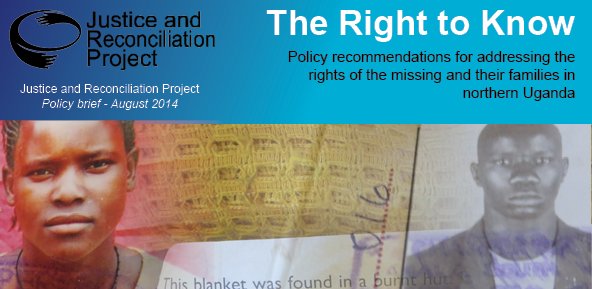
The Right to Know – Policy recommendations for addressing the rights of the missing and their families in northern Uganda

The Right to Know communicates the findings of a pilot study done in in Palabek Kal and Palabek Gem sub-counties in Lamwo District, to establish the circumstances under which people disappeared, examine past and present coping strategies used by the affected communities, evaluate surviving families’ needs, and provide recommendations for civil society organisations, the Ugandan government and international actors.


Overview

Increasingly, the missing victims of mass atrocities around the world are being formally recognised as a key impediment to genuine social repair and transitional justice. A recent conference organised by the International Commission on Missing Persons (ICMP) found that where a concerted effort was made to locate and identify the missing victims of mass atrocities some of these impediments were overcome. Going forward, the international community now recognises that the missing victims of past and ongoing mass atrocities are an urgent global concern that warrants a structured and sustained response that works in tandem with local government and civil society organisations. As such, the Government of Uganda and Ugandan civil society organisations, in collaboration with relevant sectors within the international community, have a legal and moral obligation to address the missing victims of Uganda’s recent civil war in order to promote genuine social repair and transitional justice in northern Uganda.

In line with these international developments, and building upon its history of working with families affected by the recent civil war, the Justice and Reconciliation Project (JRP), in collaboration with the families of the missing, launched the “Right to Know” campaign in 2012 to promote awareness of the plight of the missing and the anguish of their families. JRP has since completed a pilot study in Palabek Kal and Palabek Gem sub-counties in Lamwo District that establishes the circumstances under which people disappeared, examines past and present coping strategies used by the affected communities, evaluates surviving families’ needs, and provides recommendations for civil society organisations, the Ugandan government and international actors.

This policy brief communicates the findings of this pilot study, drawing upon individual interviews and focus group discussions with families of the missing, formerly abducted persons, cultural leaders and local government leaders. These categories of participants were chosen to gain a multidimensional understanding of the lingering challenges faced by northern Ugandans whose lives have been intimately impacted by their missing relatives. Specifically: the needs of the surviving families, their sources of information on the missing, the impact of their search for information on the community, and any cultural or governmental processes that have allowed them to move forward while living with ambiguous loss. It then draws upon outreaches conducted by JRP in communities across northern Uganda to gain a better grasp of the situation.

Key recommendations

This policy brief recommends that the Government of Uganda, in collaboration with the international community and civil society organisations (CSOs) in northern Uganda, should take the following actions:

  • Formally and publicly acknowledge the missing victims of war and related atrocities in northern Uganda as a prominent obstacle to social repair;
  • Ensure a comprehensive transitional justice policy framework and subsequent legislation that reaffirms forced disappearance as a crime against humanity and, within this legal prohibition, formally recognises the rights of the missing and their surviving families;
  • Establish an independent commission on missing persons to collaborate with surviving families to generate a centralised database and oversee search efforts;
  • Provide economic support and skills training for the families of the missing so they can better overcome their unique economic burdens; and
  • Support ongoing research in northern Uganda beyond Palabek toward identifying regional particularities related to the needs of families of the missing.

Download this entire policy brief here: JRP Policy Brief – The Right to Know, August 2014 (pdf)
Categories
Reports

2013 Annual Report

2014 Annual Report cover 06
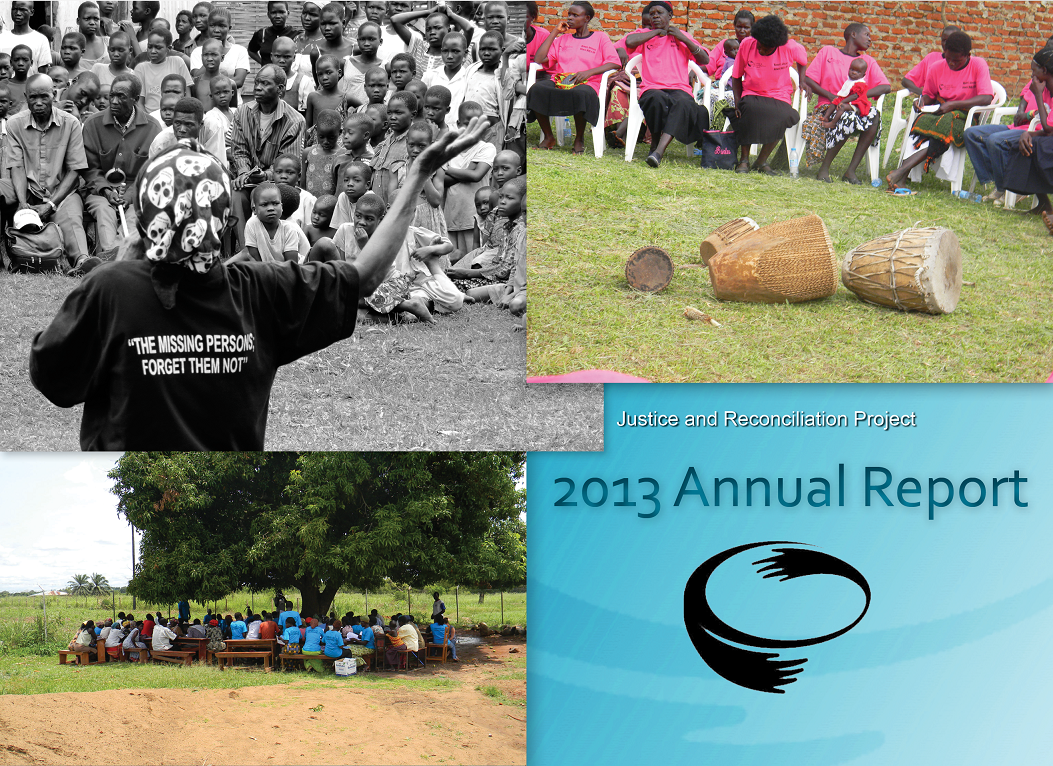
JRP’s Annual Report outline’s the organisation’s activities in 2013 under four key areas: 1) the preservation of memory of conflict-affected communities; 2) advocacy for locally sensitive approaches to transitional justice; 3) mobilisation of communities to engage in processes of redress, reconciliation and healing; and, 4) supporting vulnerable groups and individuals in their pursuit of justice.

Download: 2013 Annual Report (pdf)

Categories
Blog

It Was Only The Gun Speaking launched in Arua

Survivors of the Ombaci massacre of 1981, 24 June 2014


On 24 June 2014, JRP attended the second annual memorial of the Ombaci Massacre of 1981 at the Ombaci Catholic Mission, Arua in the West Nile sub-region of northern Uganda. The event, organised by members of the Ombaci War Victim’s Association, consisted of a memorial prayer led by the Bishop of Arua diocese, the Rt. Rev. Sabino Odoki, and a follow-up event, which included presentations by survivors of the massacre. In his speech, Bishop Odoki called upon the people to speak out against oppression, crimes and human rights violations. He also called for reconciliation among the peoples of West Nile, and with those outside of the sub-region. He also identified the trauma that still exists for victims of massacres like those in Ombaci as needing to be addressed.

The event was also attended by Bernard Atiku, the Member of Parliament for Ayivu county in Arua, who pledged to work with the survivors group to improve the massacre memorial site, as well as the Arua Resident District Commissioner (RDC), Peter Debele, among others.

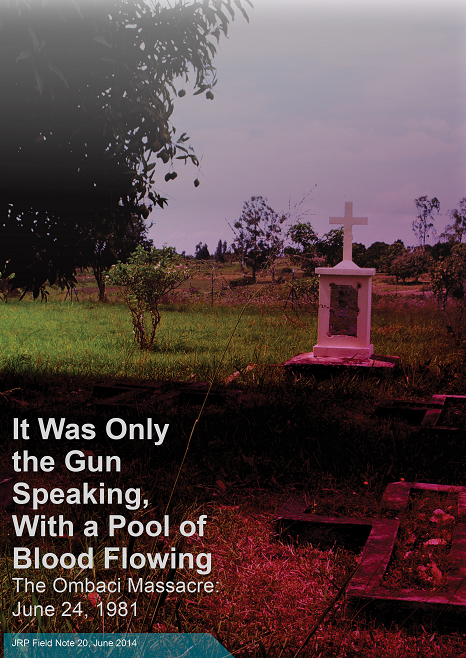
The event concluded with the launch of JRP’s 20th Field Note It Was Only the Gun Speaking, With a Pool of Blood Flowing: the Ombaci Massacre  June 24, 1981.


Categories
Newsletters & Magazines

Voices Magazine Issue 7

Voices Issue 07 cover_sm

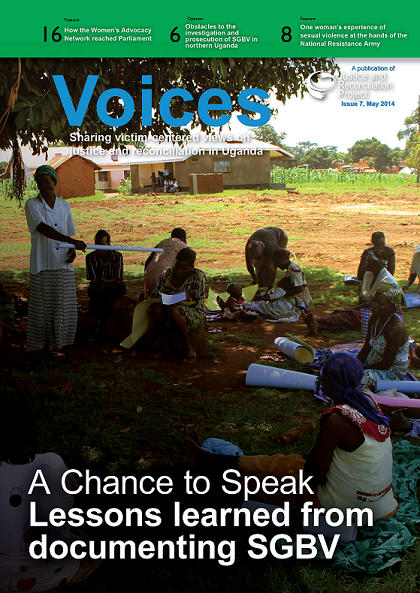
After years of engaging with survivors of conflict in northern Uganda, the Justice and Reconciliation Project’s work has revealed sexual and gender based violence as one of the most complex defining characteristics of the war that took place in the region. As such, addressing the issue has proven to be one of the biggest challenges facing peace-builders. In JRP’s recent Field Note – The Beasts at Burcoro – community members describe the molestation, rape and torture both men and women suffered at the hands of the National Resistance Army’s 22nd Battalion in 1991. Over twenty years after the occurrence, many survivors still harbour the lingering effects of the attack because mechanisms designed to address their specific needs have not been provided for them. This issue of Voices magazine deals with this very relevant aspect of transitional justice today, and examines the ways in which it can be addressed. Read more here (pdf)

Read the entire issue here: Voices Issue 07 (pdf)

Categories
Field Notes

It Was Only the Gun Speaking, With a Pool of Blood Flowing The Ombaci Massacre: June 24, 1981

It Was Only the Gun Speaking, With a Pool of Blood Flowing: The Ombaci Massacre: June 24, 1981 JRP Field Note 20, June 2014
It Was Only the Gun Speaking, With a Pool of Blood Flowing: The Ombaci Massacre: June 24, 1981
JRP Field Note 20, June 2014

Located just 4 kilometres north-west of Arua town on the Kaya Highway/Rhino Camp Road, in Arua District is Ombaci College. On Wednesday, June 24, 1981, the Uganda National Liberation Army (UNLA) attacked civilians who had taken refuge at Ombaci Colleges, claiming the lives of close to 100 people and leaving countless wounded.

This report presents a detailed account of what took place during the Ombaci Massacre and the lasting effect it has had on the survivors based on individual interviews and focus group discussions with survivors and relatives of the victims.

The massacre was by all accounts extremely chaotic, with groups of soldiers entering from all sides of the school and mission, and roving from room to room shooting and looting. This highlights the challenges survivors continue to face and make a number of recommendations which arose from our interviews, chiefly a call for compensation of survivors, as well as support for livelihoods, education, and reconciliation.

Read the entire report here:

Ombaci (English)

Ombaci (Lugbara)

Categories
Blog

Share your voice in the next issue of Voices magazine

CC_Voices-Issue-06-cover-310x440
Voices magazine is a platform for victim-centred views on transitional justice.

Are you interested in contributing to the next issue of Voices magazine? We welcome guest articles from 700 – 1000 words. Email your contributions to voices@justiceandreconciliation.com.

Read previous issues of the magazine here.


Categories
Reports

Youth Advocacy: Transitional Justice Competitions

TJ Quiz Issue Report cover

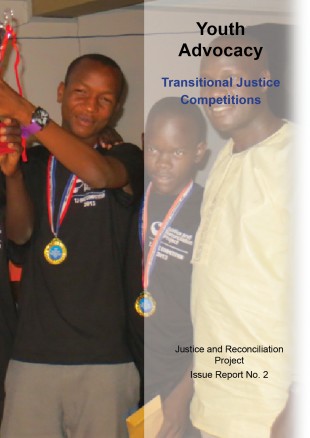
The Justice and Reconciliation Project (JRP) sought to give voice to the young people of Northern Uganda as it conducted its 2012 and 2013 Transitional Justice (TJ) Quiz Competitions in schools around the Acholi, Lango, Teso, and West Nile sub-regions. 

JRP adopted the themes Everybody Counts: Voices of Young People in Transitional Justice in 2012 and Across Ethnic Boundaries in 2013, to emphasise the promotion of dialogue between not only older and younger generations, but also between youth of different backgrounds.

JRP focused on creating a safe environment where the youth would feel both supported and empowered to discuss their justice needs. During the quiz competition students’ general knowledge on transitional justice processes was tested, with a great emphasis on the Ugandan context. Additionally, each team was given the opportunity to share personal conflict experiences and formulate their own recommendations. This took the form of a ‘Compulsory Presentation’ round, which made up the largest portion of points awarded during the competition.

As the name suggests, the purpose of these presentations was to provide space for the students to not only share their youth-specific experiences during the armed conflict, but also to advocate for what they find most pressing in today’s environment of post-conflict reconstruction in Uganda. In making recommendations, the students were asked to reflect on the potential for youth in making active contributions to ongoing initiatives.

JRP’s overarching goal in creating the Transitional Justice (TJ) Quiz was to enhance capacity of the young people in northern Uganda to actively participate in peacebuilding, reconciliation and post-conflict reconstruction. Increasing the awareness of these students and facilitating a critical discussion concerning the role of youth during and after conflict helped to achieve this goal.

In the words of many participating students, the TJ Quiz was important in bringing a ‘voice to the voiceless’.

Download the report: TJ Quiz Issue Report (PDF)

Categories
Reports

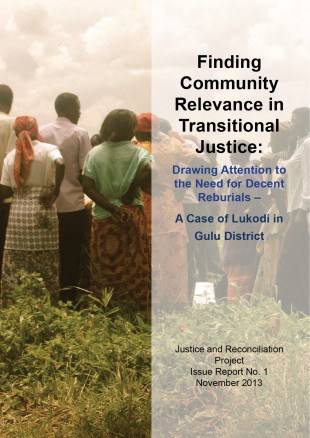
Finding Community Relevance in Transitional Justice: Drawing Attention to the Need for Decent Reburials – A Case of Lukodi in Gulu District

Lukodi Issue ReportDownload this report here: Lukodi Issue Report (pdf)


Categories
Press Releases

Parliament adopts resolution to address the needs of war-affected

Women’s Advocacy Network petition unanimously adopted by Parliament

WAN parliament
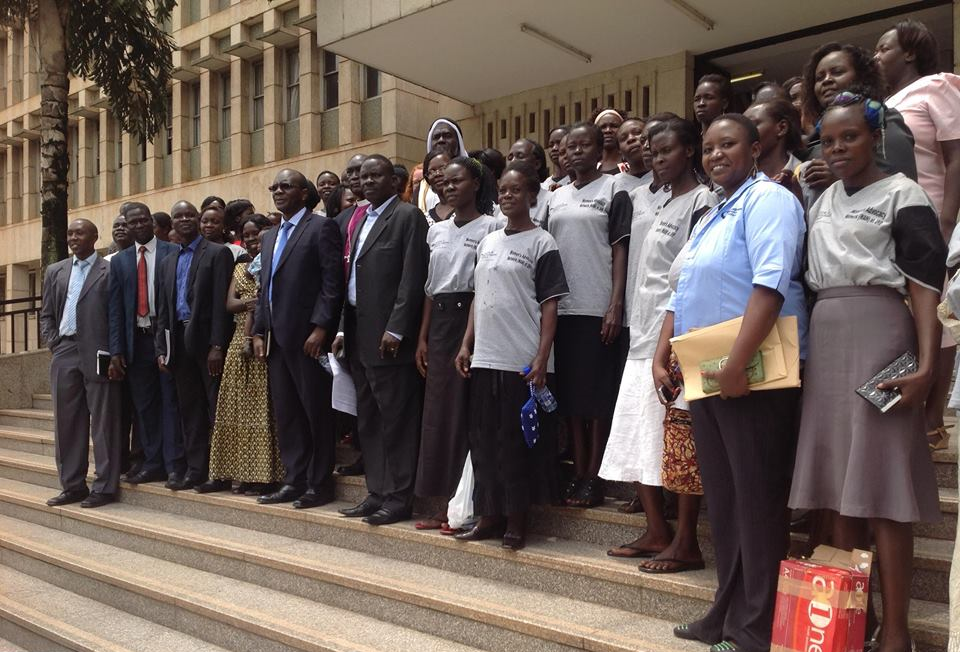
Members of the Women’s Advocacy Network (WAN) pose with Members of Parliament in front of Parliament in Kampala after presenting a petition to the Uganda Women Parliamentarian’s Association on 14 March 2014. Picture courtesy of Sylvia Opinia.

KAMPALA – On 9 April 2014, the Ugandan Parliament adopted a resolution calling for the establishment of a “gender sensitive reparations fund” and the offering of reparations for war-affected women and men. The resolution also calls for the government to provide free and accessible health services for war-affected women and children as well as to ensure the integration and resettlement of children born in captivity and formerly-abducted women in their communities.

This comes as a result of a motion tabled by Aswa County, Gulu District Member of Parliament Hon. Ronald Reagan Okumu on 3 April. It also comes on the heels of intense lobbying by civil society organisations such as the Justice and Reconciliation Project, a non-governmental organisation in Gulu, and specifically a petition presented by a collective of war-affected women known as the Women’s Advocacy Network (WAN) to the Uganda Women Parliamentarian’s Association in March.

After the adoption of the resolution, the Deputy Speaker of Parliament, Rt. Hon. Jacob Oulanya appointed a three member committee consisting of Hon. Rosemary Nyakingogoro, Hon. Reagan Okumu and Hon. Godfrey Kiwanda to follow up on the government’s implementation of the resolution and to update Parliament accordingly.

“This has begun the process of healing for me,” the chairperson of the Women’s Advocacy Network, Evelyn Amony said after hearing the news, “We plan to work to push for the issues we have raised until they are addressed. We also hope to meet the president of Uganda to let him know what we are going through and for him to understand the urgency of our needs.”

The resolution has been deemed a “success” and a “milestone” according to a statement issued by the Justice and Reconciliation Project.

“It has been six years since the government of Uganda undertook to establish measures that would ensure justice for victims of atrocities committed during the insurgency in northern Uganda. To date very little has been done to redress the harm that victims suffered but this landmark parliamentary resolution marks the beginning of healing and the restoration of dignity for many victims,” the organisation is quoted as saying.

###

Download this press release here (pdf): Press release 2014-04-10

Categories
Field Notes

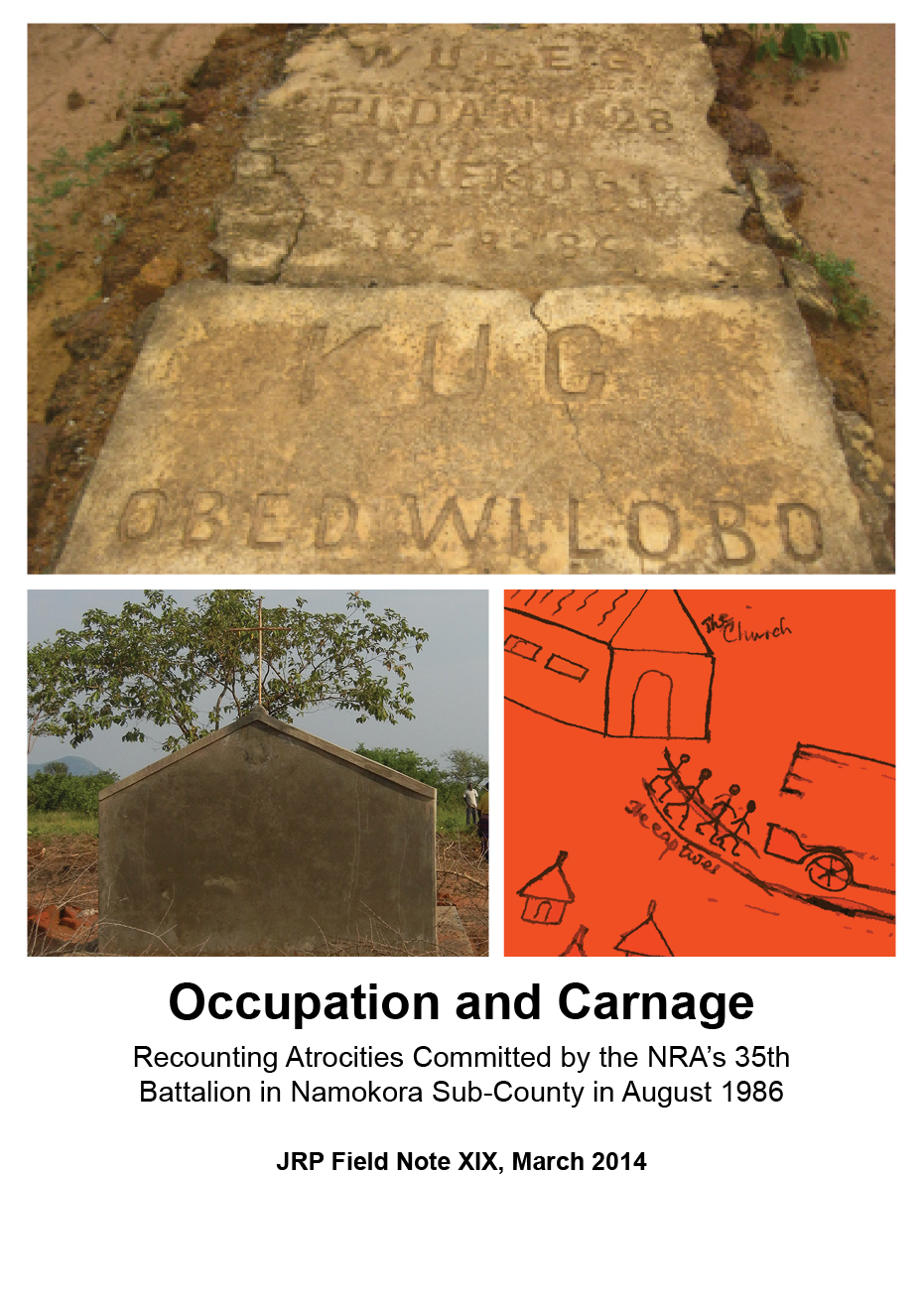
Occupation and Carnage: Recounting Atrocities Committed by the NRA’s 35th Battalion in Namokora Sub-County in August 1986 FN XIX, March 2014

Occupation and Carnage Recounting Atrocities Committed by the NRA’s 35th Battalion in Namokora Sub-County in August 1986 JRP Field Note XIX, March 2014
Occupation and Carnage
Recounting Atrocities Committed by the NRA’s 35th
Battalion in Namokora Sub-County in August 1986
JRP Field Note XIX, March 2014

Namokora is located 56 kilometres east of Kitgum town and is one of the sub-counties that frequently come up when there are discussions or debates regarding state orchestrated abuses in northern Uganda. On the 19th of August 1986, the 35th Battalion of the National Resistance Army (NRA) allegedly massacred up to 71 men and women from Namokora and other surrounding sub-counties in a lorry at Wiigweng in Oryang village, and Namokora sub-county. These men and women were accused of being rebel collaborators and/or having plans to oust the newly formed NRA government in Kampala.

Herded into the lorry, over 89 civilians founded themselves being piled onto each other with hardly any space as they were driven to an unknown destination while being closely followed by a white pickup filled with armed NRA soldiers. After driving for about three kilometes, they were indiscriminately shot at, resulting in the death of 71 men and women and the injury of scores of others. Since burials did not happen immediately after the shooting most of the bodies were feasted on by dogs and other beasts within that area.

This report provides narratives of key events leading to the Namokora massacre of 1986 based on the testimonies of survivors and relatives. It also looks at developments in that community from 1986 to date and makes specific recommendations to the government and non-governmental organisations to provide compensation to the survivors of the massacre, to address the health consequences of the NRA operation in Namokora and to support the formation of a community based victims support groups.

Read the entire Field Note here: Namokora (pdf)